How to build a capsule wardrobe
A capsule wardrobe is a small set of clothes where almost everything goes with everything else. Many lists suggest around thirty pieces per season, shoes included, but there is no magic figure. The point is that every piece earns its place by working with several others, so getting dressed takes a minute, not twenty.
It is not a uniform, and it does not have to be beige. It is simply clearing out what you never wear so you can see what actually works.
Start with what you already own
Do not go shopping first. Take everything out of the wardrobe and sort it into three piles:
- Things you wear every week. This is the real core of your capsule, even if it does not look like much.
- Things you like but never reach for. Work out why. Wrong fit, scratchy fabric, nothing to wear it with. If it is the last one, it may just be missing a partner.
- Things you never wear. Let them go. Donate, resell, or box them up for six months. If you do not miss them, you have your answer.
The first pile tells you your real colours, the cuts you trust and where the gaps are. Those gaps become your shopping list, and it is usually shorter than you expect.
Pick a tight colour palette
A capsule works because the colours talk to each other. The simplest formula has three parts:
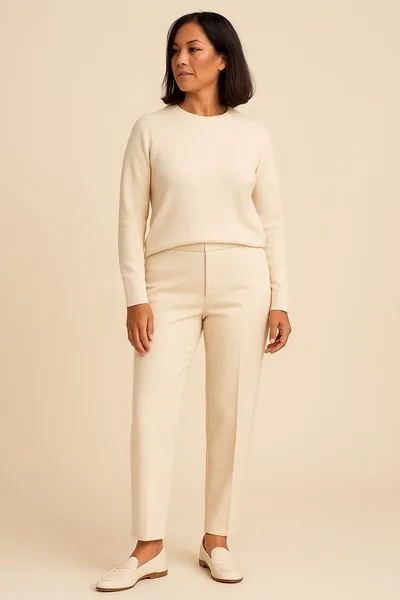
- Two or three base neutrals: navy, grey, black, cream, camel or brown. Choose the ones that suit you near your face.
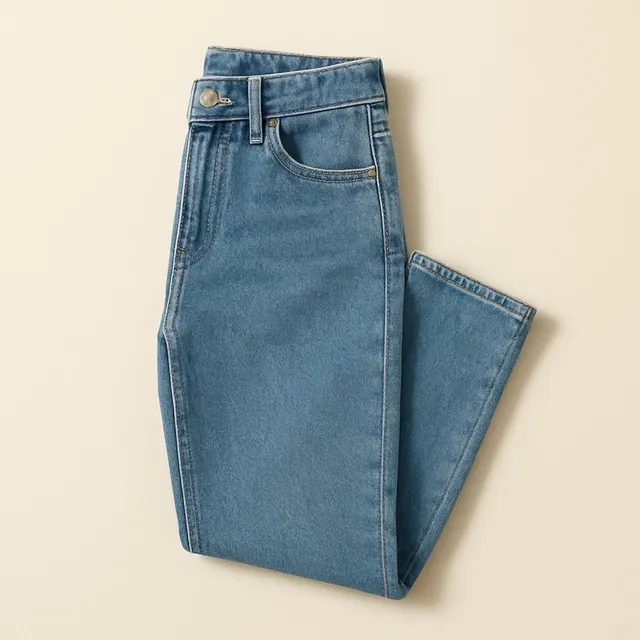
- One denim wash: mid or dark, whichever you wear most.
- One or two accent colours: olive, burgundy, sky blue, red. Keep them to single pieces like a jumper or a shirt.
If you are stuck, look at your most worn pile again. There is nearly always a palette hiding in there already.
The core pieces
Treat this as a starting point, whatever you usually wear. Adjust cuts and numbers to your life: office days mean more shirts, working from home means more knitwear.
Tops
- Three plain T-shirts: white, grey or black, and one in your accent colour.
- Two shirts: one white or pale blue, one with more texture, such as linen, Oxford cloth or chambray.
- Two fine or mid-weight knits in neutrals. One crew neck, one roll neck or V-neck.
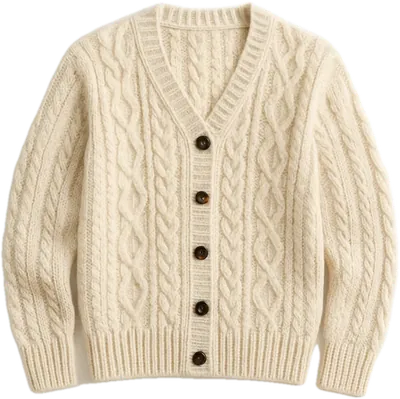
- A cardigan or a plain sweatshirt, depending on your style.
Bottoms
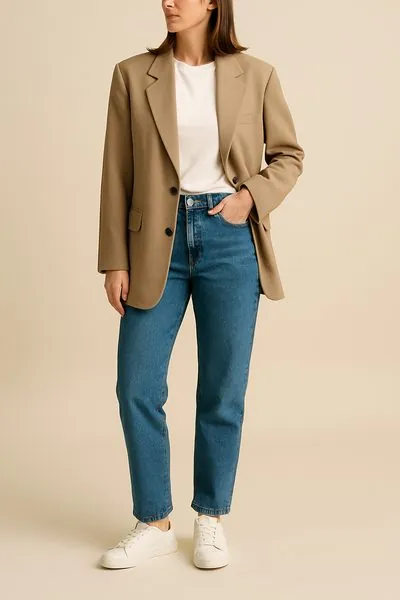
- Straight-leg jeans in a mid or dark wash.
- One pair of neutral trousers: chinos, pleated or a tailored straight cut.
- A third piece you choose: another pair of trousers, a midi skirt, or shorts for summer.
Layers and dresses
- A blazer or overshirt you would happily wear with jeans.
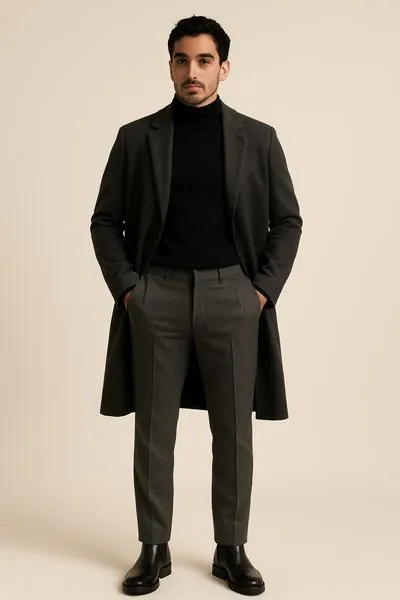
- A transitional coat, like a trench, plus a proper winter coat.
- If you wear dresses, one plain style that works with trainers and with smarter shoes.
Shoes
- Clean white or neutral leather trainers.
- One smarter shoe: loafers, Derbies or Chelsea boots.
- Boots for rain or cold, if your climate needs them.
For more on footwear, see what shoes to wear with jeans.
Check that it all works together
Quick test: take each top and find at least three bottoms you would wear it with. If a shirt only works with one specific pair of trousers, it is a one-off, not a capsule piece.
Second test: put together ten different outfits without repeating the same top and bottom pairing. Fifteen to twenty well chosen pieces get you there easily. If you cannot reach ten, look at the colours. You probably have too many accents, or one neutral that fights the rest.
Watch the dress level too. If everything is formal, weekends will feel thin. If everything is sporty, a dinner or a client meeting will catch you out. The sweet spot is clothes that sit in the middle, what most people call smart casual: chinos, an open-collar shirt, a fine knit, clean shoes.
Common mistakes
- Copying someone else's list word for word. If you never wear skirts, do not buy one because a list told you to. That includes this one.
- Choosing by colour alone. A camel jumper with sleeves that are too short will sit in the drawer, however well it matches.
- Going all black. It works for some people, but it gets heavy, especially in summer. Add at least one light neutral.
- Ignoring the weather. A capsule for Manchester and one for Los Angeles look nothing alike. Plan for your ten most common days, not your ideal one.
- Buying it all at once. Fill the gaps slowly. That way you learn what you actually wear.
One capsule, four seasons
You do not need to start over every time the weather turns. Most pieces last all year: jeans, tees, shirts, trainers. What rotates is the layering and the fabric weight.
- Spring and autumn: trench, overshirt, fine knits, ankle boots.
- Summer: linen and light cotton, shorts or a skirt, sandals or espadrilles.
- Winter: wool coat, chunky knit, roll neck, scarf, boots.
Store the off-season pieces in a box or on the top shelf. When you bring them back out, you will see them with fresh eyes and know if they still deserve the space.
Getting more out of fewer clothes
The same pieces can look very different once you play with three things:
- Proportion and finish. Tuck the tee, roll the shirt sleeves, cuff the jeans.
- Layers. A cardigan over a T-shirt and under a coat is a new outfit made from yesterday's clothes.
- Accessories. A leather belt, a bright scarf, a watch or a bag shift the mood without buying anything.
If combinations do not come easily, take a quick mirror photo of every outfit you like. Within a few weeks you will have your own lookbook. Keep it in Orzelle.
Your weekend checklist
- Empty the wardrobe and make the three piles.
- Write down your two or three neutrals and your accent colour.
- Count your tops, bottoms, layers and shoes.
- Run the ten-outfit test.
- List the gaps, five pieces at most.
- Buy one at a time and wear it for two weeks before the next.
A capsule wardrobe is never finished. It shifts when your job, your city or your body changes. The idea underneath stays the same: fewer clothes, all of them useful, all of them yours.