How to tell if an outfit looks good on you
Whether an outfit works has less to do with what you picked and more to do with how it sits on you. The same white T-shirt can look sloppy or sharp depending on the size, the length and what you wear with it. So instead of glancing in the mirror and going on a gut feeling, check the outfit in parts, in a set order.
This works for suits and jeans, dresses and trousers alike. Six checks, about two minutes.
1. Start with the shoulders
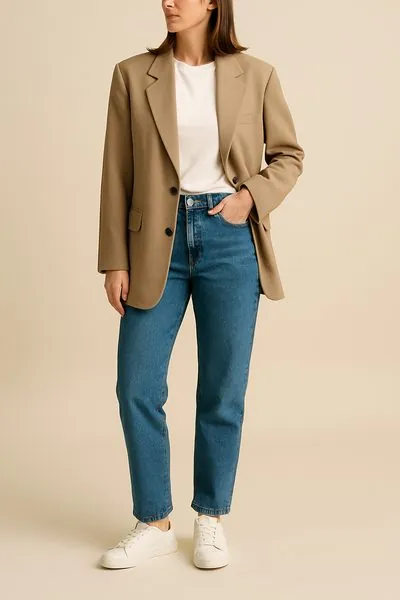
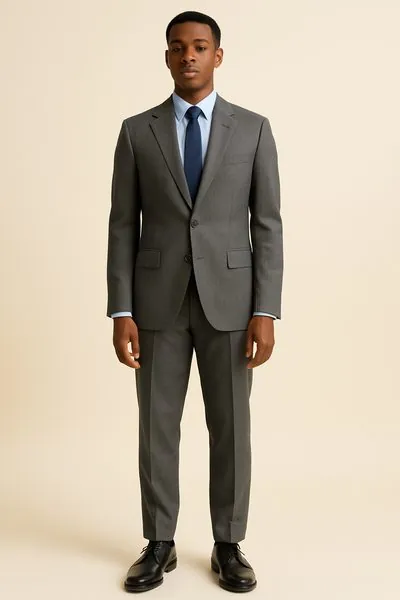
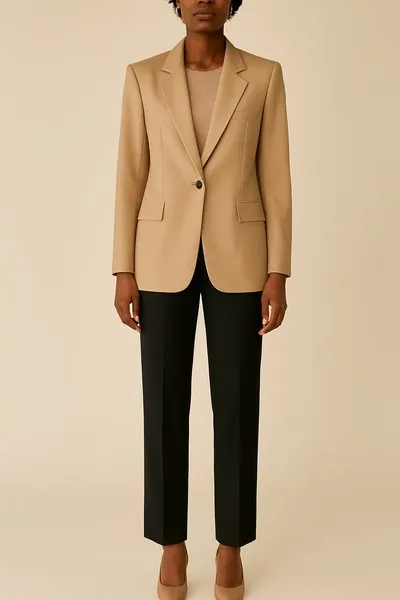
On blazers, coats, shirts and jumpers, the shoulder seam should sit right at the edge of your shoulder bone. If it hangs down your arm, the piece is too big. If it pulls towards your neck and the fabric goes tight when you cross your arms, it's too small.
The exception is a dropped shoulder, which is cut that way on purpose. The seam sits lower, but the rest of the garment should look evenly relaxed, not two sizes up.
Shoulders are the hardest thing to alter. Any tailor can take up sleeves or hems. Almost none will rebuild a shoulder. If you love a jacket but the shoulders are off, walk away.
2. Check the lengths
Every piece has a length that works and one that drags the whole outfit down.
- Jacket and coat sleeves: to the wrist bone. With a shirt underneath, show about a centimetre of cuff.
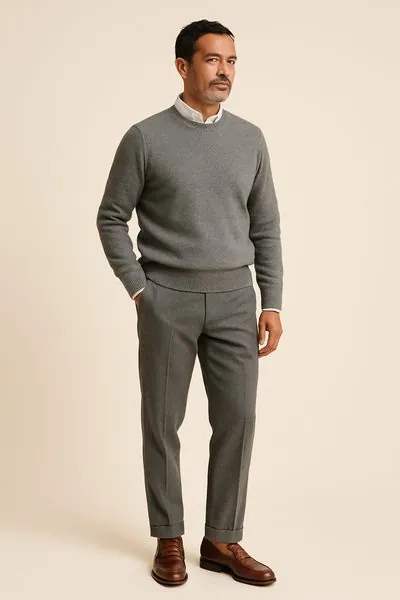
- Trousers: resting on the shoe with a slight break or none at all. If fabric pools at the ankle, they're too long. For cropped styles, a clean finish just above the ankle bone.
- Untucked tees and knits: ending around the middle of your fly. Any longer and your legs look shorter.
- Midi skirts and dresses: ending at the narrowest part of the leg, just below the knee or mid-calf.
- Long coats: fully covering whatever jacket or knit is underneath.
3. Balance the proportions
An outfit looks balanced when not everything has the same volume. The most useful rule: if one half is loose, keep the other half straight or slim.
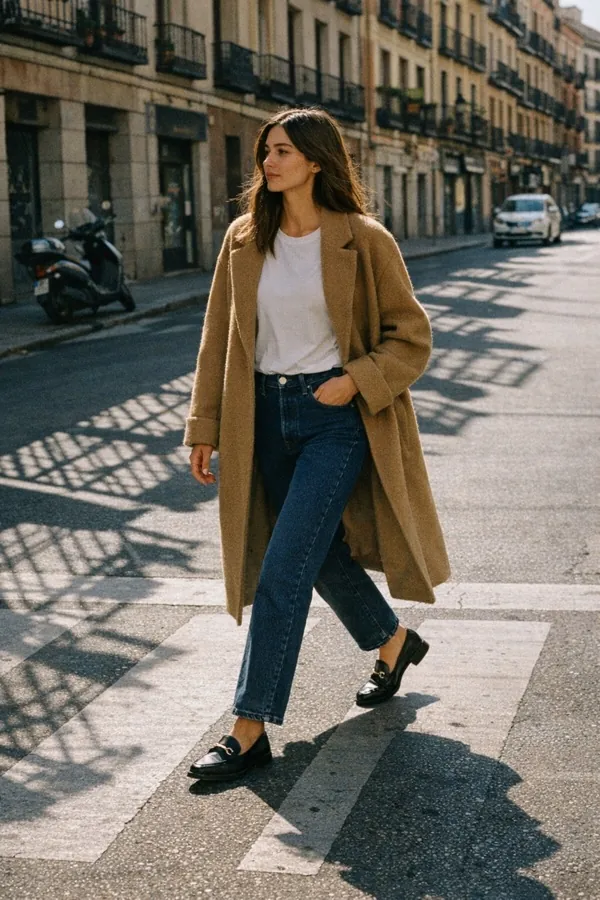
An oversized jumper sits well over straight or skinny trousers. Wide-leg trousers want something neater or tucked in on top. A long, roomy coat works best over something streamlined, like the look at the top of this page, where straight jeans, a plain tee and flat loafers keep the camel coat from swallowing the frame.
The second rule is to show where your waist is. A front tuck, a belt or a high-rise trouser makes your legs look longer, whatever your height.
4. Colour near your face
Whatever you wear above the waist changes how your face reads. Some colours brighten your skin, others drain it. You don't need a colour analysis to find out. Hold two different coloured tops up to your chin in daylight and look only at your face.
If one colour makes shadows under your eyes stand out or your skin look grey, wear it on your bottom half instead. Black, pure white and some pastels vary the most from person to person. Navy, mid grey and off-white suit nearly everyone.
5. How the colours work together
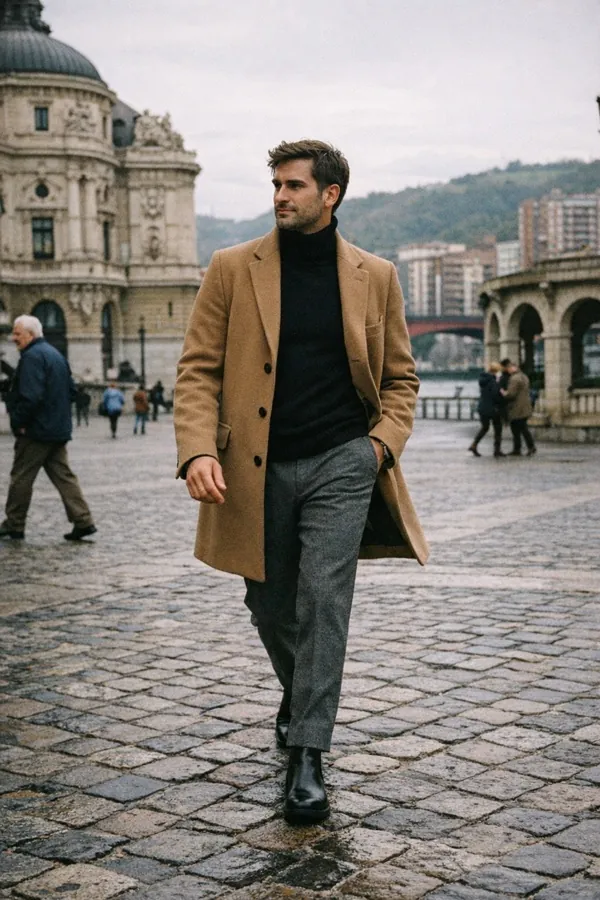
Three colours or fewer almost always look more put together. A formula that rarely misses: two neutrals plus one colour. Here, grey trousers and a black roll neck are the neutrals, and the camel coat brings the colour.
Tonal dressing works too: stone with cream, light grey with charcoal, navy with mid blue. What tends to fail is two shades that are close but not quite the same, like two different blacks or two navies that don't match. If they can't be identical, make them clearly different.
A camel coat is one of the easiest pieces to build around. Our guide on how to style a camel coat has more combinations.
6. Fabric and condition
Something can fit perfectly and still let the outfit down. Bobbled knitwear, stretched collars, creased shirts, scuffed shoes. People notice those details before they notice the label.
Keep fabric weights in the same season, too. A fine tee under a heavy coat is fine. Linen trousers with winter boots usually clash.
When the volume is on purpose
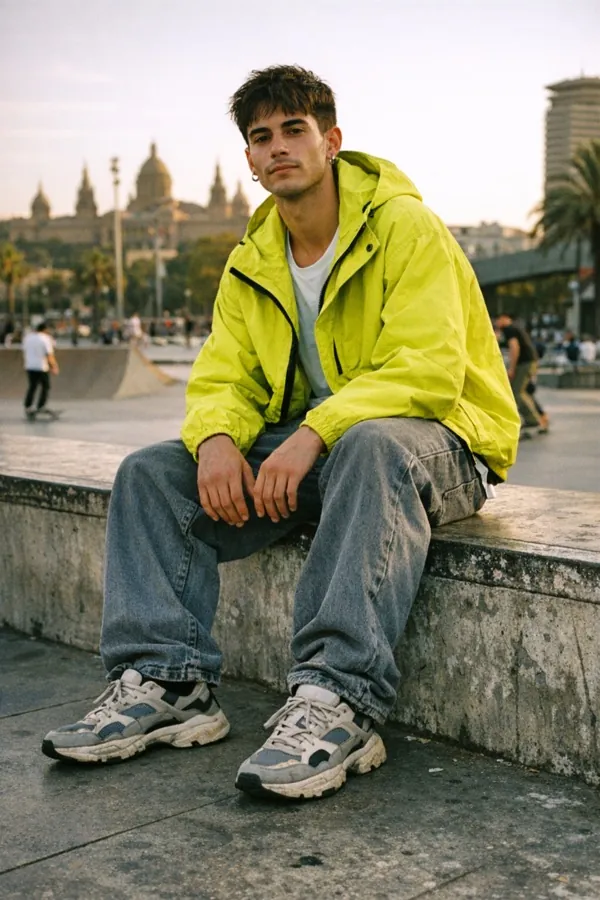
Baggy jeans, boxy jackets and chunky trainers follow their own rules. Oversized doesn't mean anything goes. What makes it work:
- The volume looks chosen, not inherited. Shoulders drop by design and the jeans stack on the trainer without dragging on the ground.
- One piece leads. In this photo, the yellow rain jacket is the focus and everything else stays quiet.
- The shoes have weight. A slim trainer disappears under a wide leg. A thick sole or a boot holds its own.
Take the photo test
Mirrors are misleading because you see yourself head-on and up close. A full-length photo taken from a metre and a half or two metres away shows the outfit the way everyone else sees it. Take two: front and side. Things you miss in the mirror, like a jacket gaping at the back or trousers bagging at the seat, are obvious in a photo.
Try two versions of the same look with one piece swapped. Side by side, the difference is far clearer than from memory. A second pair of eyes helps: a friend, or your stylists in Orzelle.
The checklist
- Shoulder seams sit at the edge of your shoulders.
- Sleeves reach the wrist and trousers barely touch the shoe.
- If one half is loose, the other is straight or slim.
- Your waist is marked, or at least suggested.
- The colour closest to your face works in daylight.
- Three colours at most, or two neutrals and one stronger shade.
- Nothing creased, bobbled or stretched out.
- Shoes are clean and match the weight of everything else.
The more of your clothes pass these checks, the easier getting dressed becomes. That's the thinking behind a capsule wardrobe: fewer pieces, all of which fit and work together.