What to wear to a job interview
Nobody gets hired for their outfit. People do get remembered for the wrong one. The aim of interview dressing is quiet: you want the person across the table listening to your answers, not wondering why your shirt is creased. Dress like yourself, one notch smarter than the people already doing the job.
Read the room before you get there
The classic mistake is treating "interview clothes" as one fixed outfit. A dark suit is right for a law firm and stiff at a design studio. Clean trainers are fine at a start-up and wrong at a private bank.
Spend ten minutes on research:
- Look at team photos on the company website and its social media. Office shots, not the summer party.
- Watch a talk or read an interview with someone who works there.
- If a recruiter set up the meeting, just ask what the dress code is. Recruiters get this question all the time.
That tells you which of the three levels below you are dealing with. Then go one step above what the team wears on an ordinary Tuesday.
Formal: finance, law, consulting, senior roles
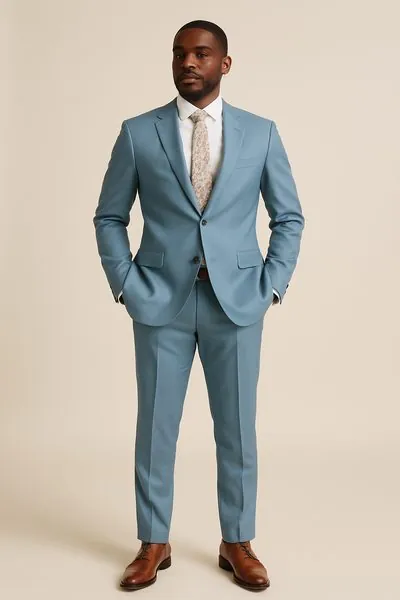
A suit is still the expectation here, whoever you are.
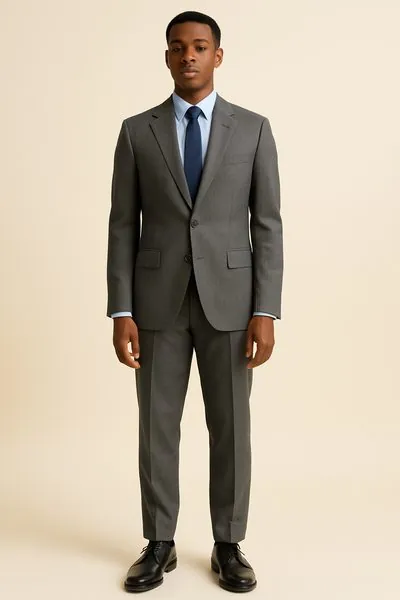
- A suit with trousers or a skirt, in navy, mid grey or charcoal. Black works too, especially in a matte fabric with a clean cut.
- A shirt or blouse in white or pale blue, nothing loud. A plain silk shell under the jacket is just as correct.
- A tie is optional in many offices now. If you wear one, keep it plain or finely patterned, in navy or burgundy.
- Leather shoes in black or dark brown: Oxfords, Derbies, loafers or a mid-height court shoe (pumps, in the US). Polished, with soles that are not worn through.
Fit is what people notice. Shoulders that sit right and trousers that just touch the shoe without bunching look sharper than an expensive suit that is a size off. If yours is too big, take it to a tailor before you buy a new one.
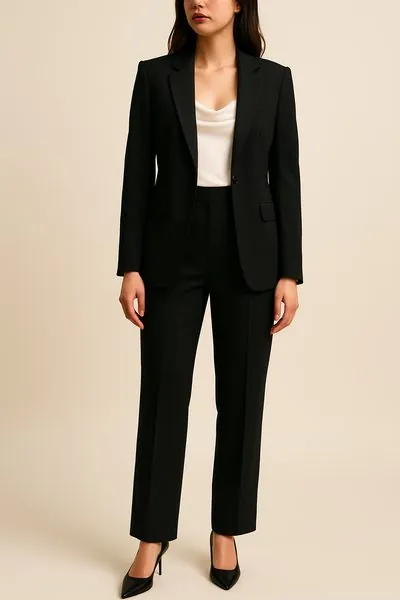
Business casual: offices, admin, sales, healthcare
Most interviews land here. Skip the full suit, but wear at least one piece with some structure.
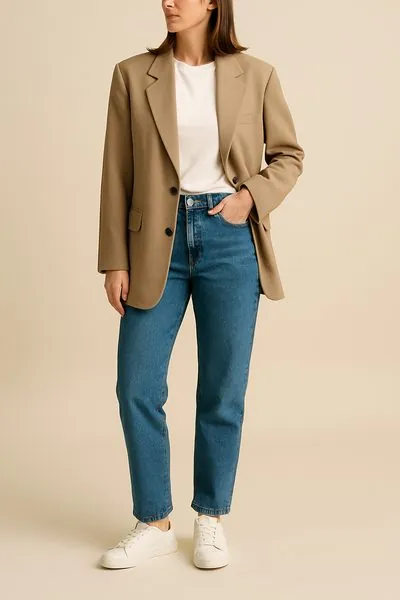
- A blazer in plain beige, grey, navy or black.
- Tailored trousers, good chinos or a midi skirt. A pressed crease helps.
- Underneath, a shirt, a fine-knit polo, a crew-neck jumper or a plain, heavy T-shirt with no logo.
- Shoes in leather: loafers, smooth ankle boots, Derbies. No running shoes.
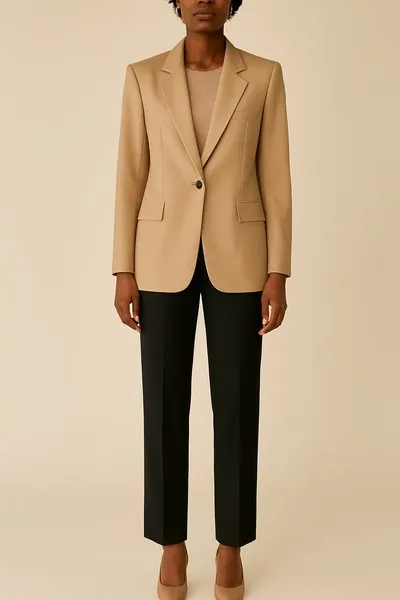
A camel blazer over black trousers is close to foolproof for any office. It looks serious without looking cold, and it works with a white shirt as well as with a thin knit.
Casual: tech, creative agencies, hospitality, retail
Turn up in a suit here and you can look like you misread the brief. Casual still means put together, though.
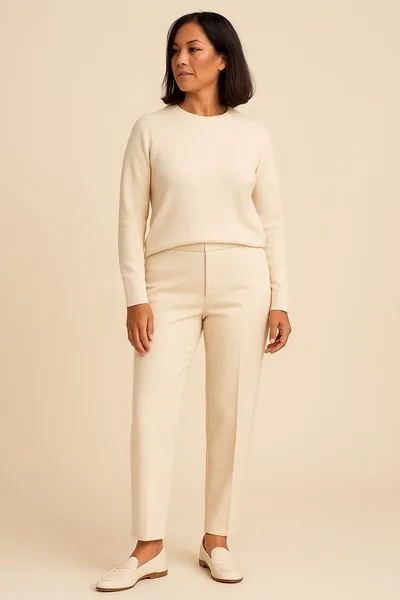
- Knitwear, fine or chunky, in grey, navy, oatmeal or bottle green, worn alone or over a shirt.
- Trousers in wool, chinos or dark jeans with no rips.
- Shoes: loafers, leather boots, or minimal white leather trainers that are properly clean.
- An overshirt or a cardigan stands in nicely for a blazer.
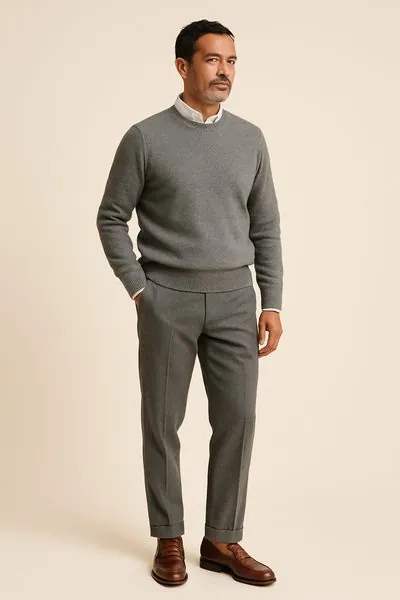
A grey sweater with a white collar showing, grey wool trousers and brown loafers is the kind of outfit that reads considered without looking like a costume. Torn between jeans and wool trousers? Go wool. If jeans it is, our guide to shoes to wear with jeans sorts out the footwear, and the smart casual dress code guide covers that middle ground in detail.
Colours that work
Dark and neutral shades look serious and never compete with you: navy, grey, black, beige, camel, cream and white. One colour is fine if it is only one, like a bottle-green knit or a burgundy blouse.
Leave the big prints, neons and anything shiny at home. On a video call, fine stripes and small checks also shimmer on screen. Solid, mid-tone colours like blue, grey and dark green come across best there, while bright white can blow out under strong light.
The details they will notice
Your interviewer sits a metre from you for half an hour or more. They see things nobody sees on the street.
- Pressed clothes. Collar, cuffs and the front of the shirt above all.
- Clean shoes. They are the first thing to get scuffed on the way.
- No lint or pet hair. Keep a lint roller in your bag.
- A plain bag. A leather tote, a folio or a neat backpack, not your gym bag.
- Light fragrance, or none. It fills a small room fast.
- Low-key jewellery. A watch, small earrings, a ring.
Common mistakes
- Wearing something new on the day. New shoes rub and new clothes pull in places you did not expect. Try the whole outfit on, standing and sitting.
- Clothes that are too tight. Gaping buttons, a blazer that will not close. Size up and look relaxed.
- Dressing up as someone else. If you never wear a tie and the company does not expect one, leave it. Discomfort shows.
- Forgetting the weather. Arriving soaked undoes a good outfit. A trench or a plain wool coat on top fixes the entrance.
- Too many talking points. A print, statement glasses, a big necklace and bright shoes at once is a lot to look at. Pick one.
Video interviews
They only see you from the waist up, but get fully dressed anyway. You will feel more like yourself, and you are covered if you have to stand up. Choose a plain top with some shape at the shoulder: a blazer, a shirt, a crew-neck knit. Put the light in front of you, not behind, and check the colour on camera before the call starts.
Your night-before checklist
- Outfit chosen, tried on and pressed.
- Shoes clean and comfortable enough for the journey.
- Coat or umbrella, depending on the forecast.
- Bag with a printed CV or resume, a pen and the lint roller.
- A backup top in case breakfast goes wrong.
If you're stuck between two outfits, a photo of each makes the choice easier. Otherwise, go with the one you stop thinking about the moment you walk in.